
【得】Chinese Character Details
| Pinyin | dé, de, děi |
|---|---|
| Zhuyin | ㄉㄜˊ, ㄉㄜ, ㄉㄟˇ |
| Radical | 彳 |
| Strokes | 11 |
| Structure | 左右 |
| HSK | 4 |
| TOCFL | 2 |
| Unicode | u+5f97 |
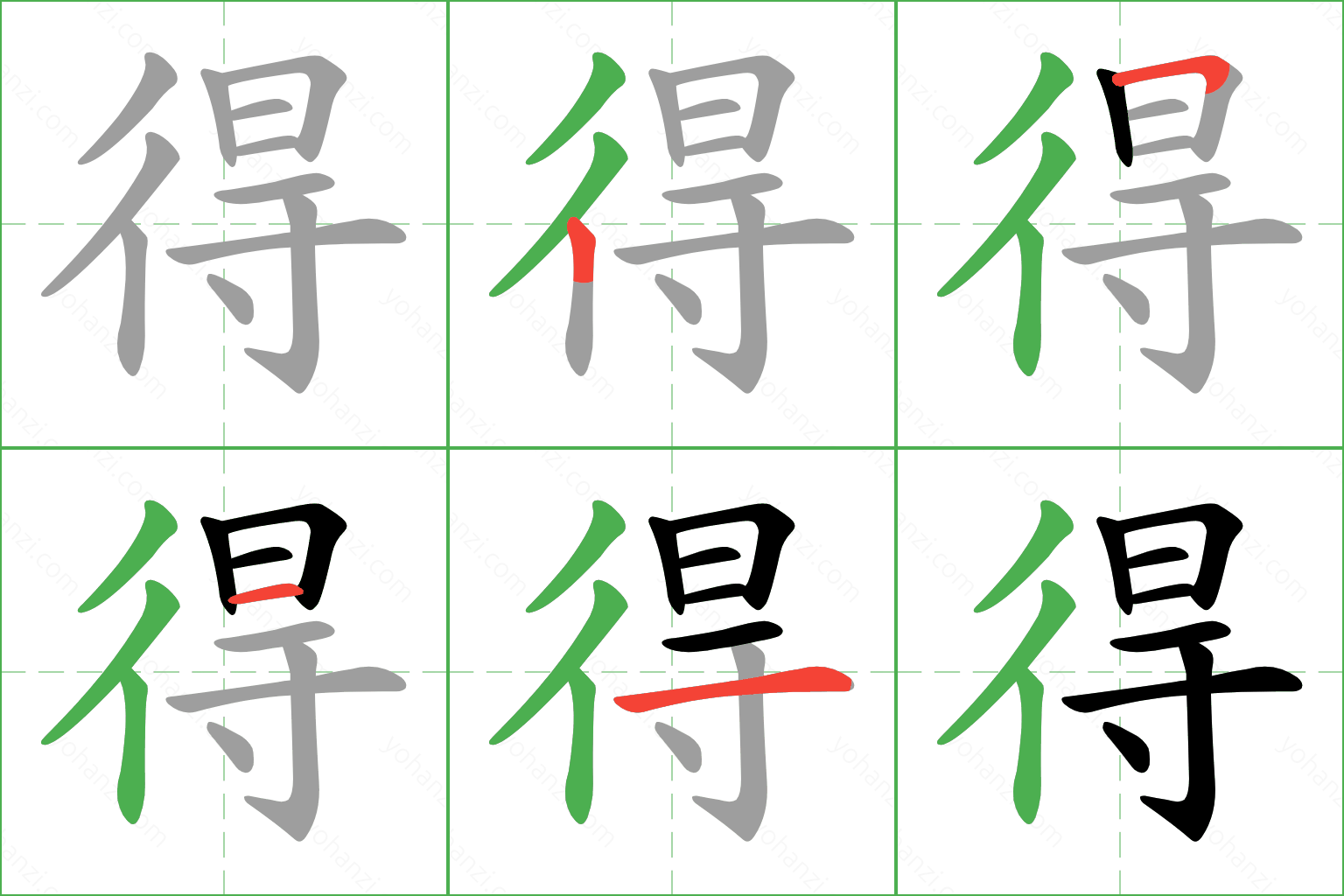
Stroke Order Diagram
🔊1.撇
🔊2.撇
🔊3.竖
🔊4.竖
5.横折
🔊6.横
7....
8....
9....
10....
11....
Meanings
dé
(1) 获取。如:“取得”、“得到”、“得志”、“得势”。
(2) 适切、合宜。如:“得体”、“得当”。
(3) 满意。如:“得意”、“洋洋自得”。
. . . . . .de
(1) 置于动词或形容词后面,表示程度。如:“飞得高”、“乐得很”。
děi
(1) 应该、必须。如:“这件事总得让大家知道。”、“时间不早了,我得走了。”
Meanings
dé
1.
染上疾病
take;catch
【Examples】
◎ 他得了重感冒。
◎ He caught a bad cold.
◎ 她小时候得过麻疹。
◎ She had measles when she was young.
de
1.
在动词或者形容词后面,引出对前面的动词、形容词的补充、说明、描写等
(linking a verb or an adjective to a complement which describes the manner or degree)
【Examples】
◎ 她激动得热泪盈眶。
◎ She was so emotional that her eyes filled with tears.
◎ 她笑得肚子痛。
◎ She laughed so hard that her stomach hurt.
děi
1.
表示揣测的必然
certainly will
【Examples】
◎ 要下雨了,要不快走,就得挨淋。
◎ It's about to rain;if we don't leave, we'll get soaked.
◎ 这事准得很难办。
◎ This matter is surely very difficult to handle.