
【可】Chinese Character Details
| Pinyin | kě, kè |
|---|---|
| Zhuyin | ㄎㄜˇ, ㄎㄜˋ |
| Radical | 口 |
| Strokes | 5 |
| Structure | 半包围 |
| HSK | 2 |
| TOCFL | 1 |
| Unicode | u+53ef |
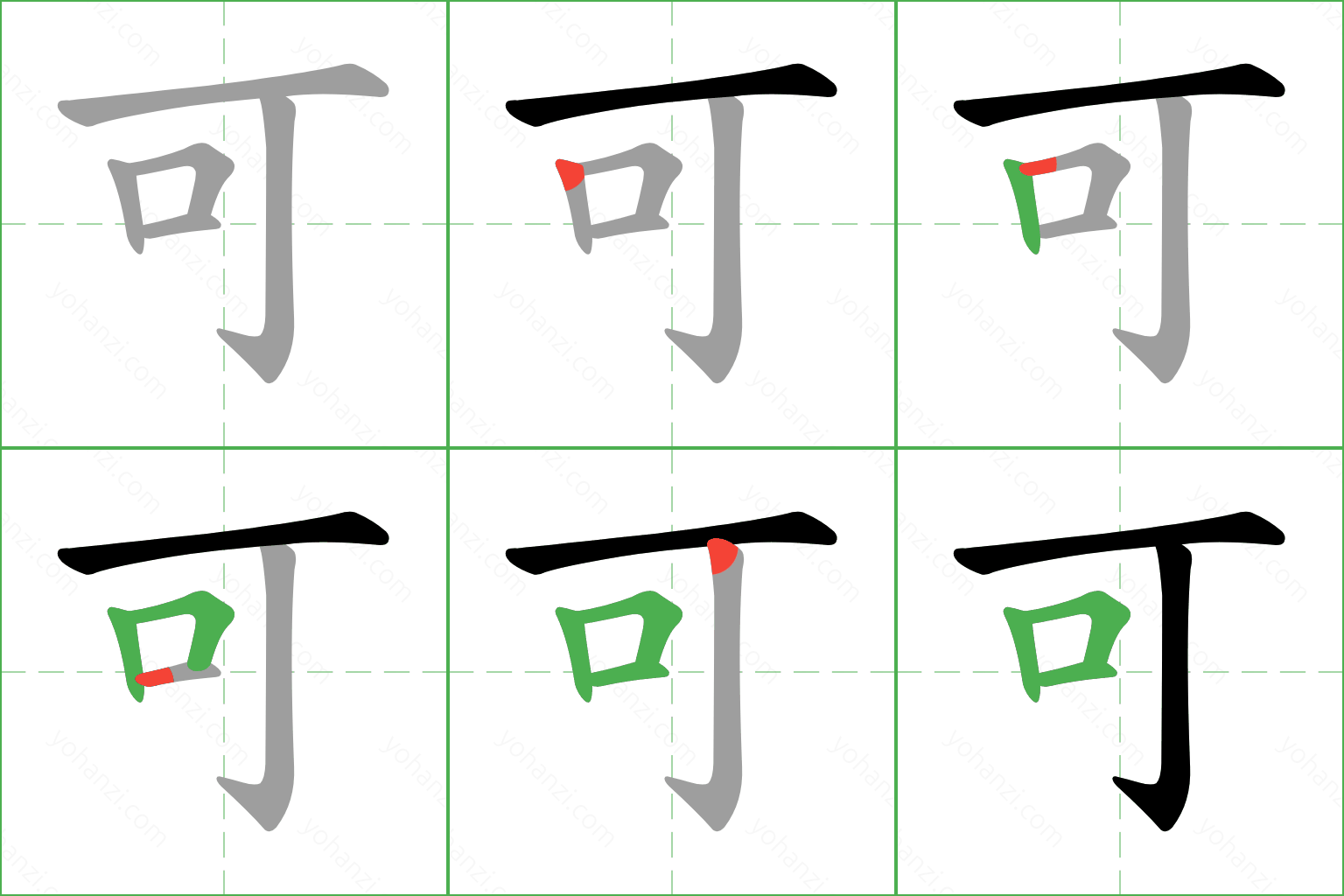
Stroke Order Diagram
🔊1.横
🔊2.竖
3.横折
🔊4.横
5.竖钩
Meanings
kě
(1) 允许。如:“许可”、“认可”。
(2) 能够、适宜。如:“可以”、“可口”、“可大可小”、“坚不可摧”。
(3) 堪、值得。如:“可爱”、“可怜”、“可惜”、“可敬”、“可恶”、“可喜可贺”。
. . . . . .kè
(1) 可汗(ㄎㄜˋㄏㄢˊ):古代西域和北方各国对君主的称呼。
Meanings
kě
1.
准备
be ready to;be willing to
【Examples】
◎ 这份工作你可干?
◎ Are you willing to do this job?
◎ 这业务你可干吗?
◎ Are you willing to do this business?
kè
1.
可汗 (kèhán) 古代鲜卑,突厥,回纥, 蒙古等族最高统治者的称号
supreme ruler of a northern nomadic tribe
【Examples】
◎ 可汗指挥着大军。
◎ Khan commanded the army.
◎ 可汗的权力很大。
◎ The power of the Khan is very great.
. . . . . .