
【兴】Chinese Character Details
| Pinyin | xīng, xìng |
|---|---|
| Zhuyin | ㄒㄧㄥ, ㄒㄧㄥˋ |
| Radical | 八 |
| Strokes | 6 |
| Structure | 上下 |
| HSK | 4 |
| TOCFL | - |
| Unicode | u+5174 |
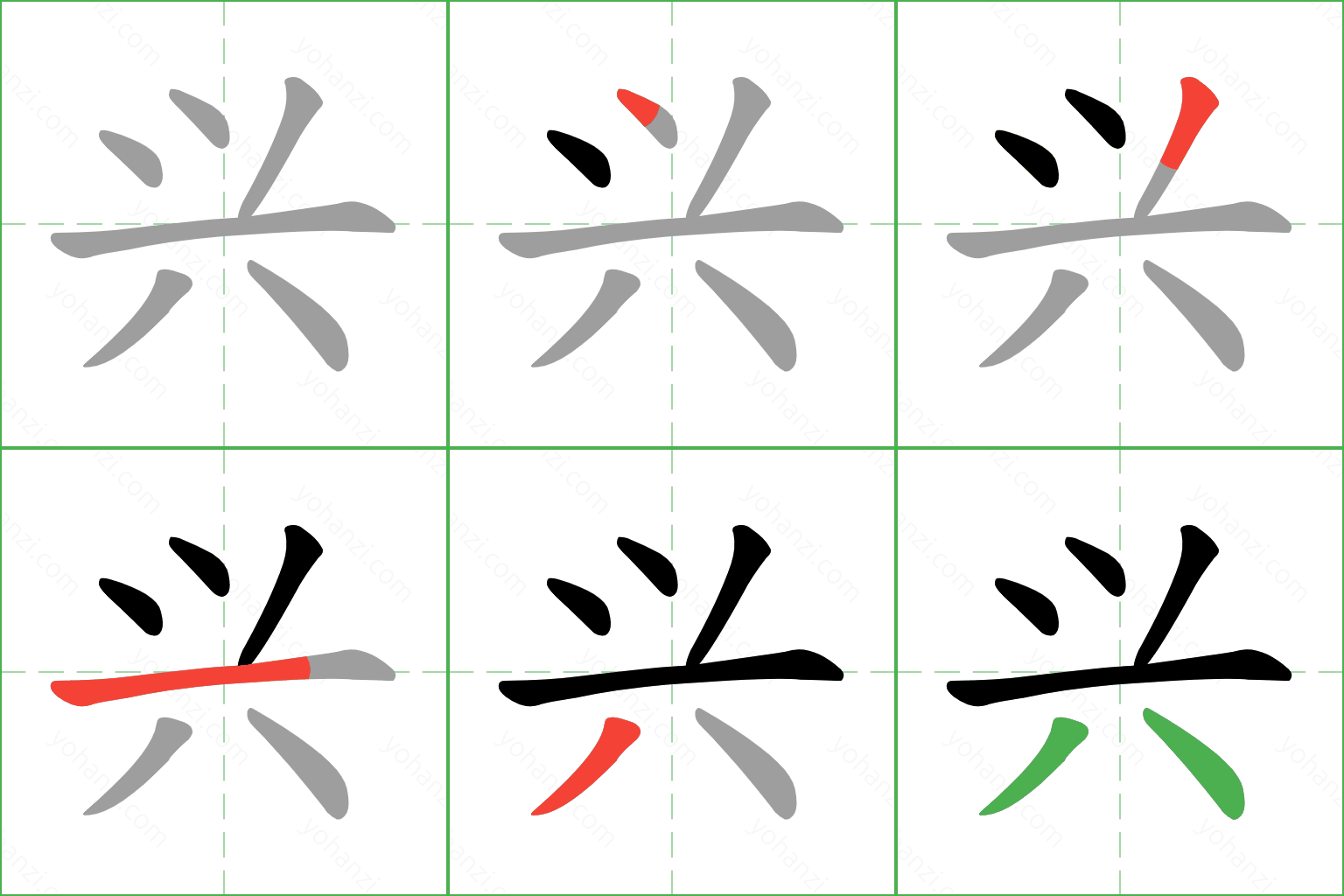
Stroke Order Diagram
🔊1.点
🔊2.点
🔊3.撇
🔊4.横
🔊5.撇
🔊6.点
Meanings
xīng
(1) 事情的发生或出现。如:“兴起”。
(2) 创立、建造、举办。如:“兴办”、“兴学”、“兴建”。
(3) 旺盛、昌盛。如:“兴隆”、“兴盛”、“兴旺”。
. . . . . .xìng
(1) 情致、趣味。如:“助兴”、“诗兴”、“兴致”、“兴趣”、“酒兴正浓”。
(2) 快乐、喜悦。如:“高兴”、“兴高采烈”、“乘兴而来,败兴而归”。
Meanings
xīng
1.
允许;许可(多用于否定)
[usu. in the negative] permit;allow
【Examples】
◎ 开会的时候不兴说话。
◎ It's not allowed to talk during the meeting.
◎ 过年时不兴剪头发。
◎ It is not customary to cut hair during the New Year.
xìng
1.
兴趣;兴致
mood or desire to do sth.;interest;excitement
【Examples】
◎ 她兴高采烈地回家了。
◎ She happily went home.
◎ 大雨让我们的旅行很扫兴。
◎ The heavy rain spoiled our trip.
. . . . . .